
Does Roof Rejuvenation Work? The Science of Shingle Restoration

Roof rejuvenation offers Southeastern Minnesota homeowners a data-supported path to extend the life of existing asphalt shingles, moving beyond simple coatings to true molecular restoration.
This evaluation clarifies the science behind using corn-based oils to replenish the aged petrochemicals that keep shingles flexible and intact.
You will discover the independent laboratory validations confirming improved flexibility and granule retention, see the precise criteria that determine if your current roof is a viable candidate for treatment, and weigh the financial benefits against a full replacement.
Understanding the necessary professional standards and the environmental advantages of these bio-based solutions allows you to make an informed stewardship decision for your property’s resilience against our region's climate.
Begin exploring the verifiable outcomes now to determine if restoration is the right investment for your home.
The Science Behind Roof Rejuvenation: Restoring Asphalt at the Molecular Level
Roof rejuvenation is a molecular restoration process that replenishes the essential petrochemicals that shingles lose as they age and weather. By infusing the asphalt with specialized bio-based oils, the treatment restores the shingle's internal flexibility and waterproof seal from the inside out.
The molecular-level penetration process follows these specific steps:
The treatment is applied as a topical spray that immediately begins to soak through the protective granule layer of the shingle.
The bio-based oils travel deep into the asphalt matrix, reaching the core layers that have become brittle due to UV exposure.
Once absorbed, the solution chemically reintegrates with the remaining asphalt to restore the shingles' ability to expand and contract.
This chemical bond helps re-secure the protective surface granules, which are vital for shedding water and reflecting heat.
This molecular change is backed by more than just local observation; it is supported by rigorous scientific testing and certification.
Verifying the Claims: Independent Lab Results and USDA Bio-Preferred Status
When a service promises to add a decade or more to your roof for a fraction of the cost of replacement, skepticism is natural. At Roof Rejuvenate MN, we don’t expect you to take our word for it. The efficacy of our corn-based formula is backed by rigorous independent testing and federal recognition, providing the data needed to prove that roof rejuvenation really works.
USDA Bio-Preferred Status: A Mark of Quality and Safety
Our rejuvenation treatment isn't just "green" in name—it carries the USDA Bio-Preferred designation. This means the product has been certified by the U.S. Department of Agriculture to contain a significant amount of renewable, plant-based ingredients.
For homeowners in Southeastern Minnesota, this serves as a major trust signal. It ensures that the treatment being sprayed on your home is:
Environmentally safe for your family, pets, and landscaping.
Non-toxic and free from the harsh chemicals found in traditional asphalt products.
Recognized by the federal government for its contribution to a sustainable bio-economy.
PRI Asphalt Technologies Lab Findings
To understand the scientific impact of the treatment on aging shingles, we look to PRI Asphalt Technologies, the leading independent testing laboratory for the asphalt roofing industry. Their studies focus on the two primary causes of roof failure: brittleness and granule loss.
PRI Asphalt Technologies Lab ResultsBy replenishing the essential oils that evaporate from shingles over time, the treatment restores the shingle’s physical properties to a "like-new" state. You can view the comprehensive data in the .
The following table summarizes the performance of weathered shingles before and after receiving the rejuvenation treatment:
| Performance Metric | Weathered Shingle (Untreated) | Rejuvenated Shingle (Treated) | Improvement |
| :--- | :--- | :--- | :--- |
| Flexibility (Cold Fold Test) | Fails; cracks and breaks when bent. | Passes; remains pliable even in cold temps. | Significant restoration of crack resistance. |
| Granule Retention | High loss; protective granules easily shed. | High retention; granules are "locked" into the asphalt. | 30% - 50% reduction in granule loss. |
| Waterproofing | Compromised; shingles become porous. | Fully restored; water beads and sheds effectively. | Complete seal against moisture. |
Supporting the 15-Year Life Extension
The 15-year life extension claim is the most exciting prospect for homeowners, but it is important to understand how this is achieved. The PRI data confirms that a single application can restore a shingle's performance for approximately five years. By repeating the process, we can effectively "stop the clock" on roof aging.
However, there are a few caveats to ensuring your roof reaches that 15-year milestone:
Initial Condition: The roof must still be in a "treatable" state. Rejuvenation cannot fix shingles that are already missing, curling, or have significant structural deck damage.
Maintenance Schedule: The 15-year extension is typically achieved through three successive treatments, spaced five years apart.
Professional Application: The formula must be applied at the correct temperature and saturation level to ensure the oils penetrate deep into the asphalt layer.
Local Climate: In Southeastern Minnesota, extreme temperature swings make early intervention key to preventing the freeze-thaw cycles that accelerate shingle cracking.
The Signs Your Southeastern Minnesota Roof Needs Rejuvenation
In Southeastern Minnesota, our roofs endure everything from humid summers to the weight of heavy winter snow. Over time, the harsh weather and intense UV rays cause the petroleum-based oils naturally found in asphalt shingles to evaporate.
When these essential oils deplete, the shingles lose their flexibility and become prone to failure. This is why a roof that is only 10 or 15 years old can often look and perform like it’s much older. If you notice any of the following symptoms, it’s a direct sign that your roof is "drying out" and could benefit from shingle rejuvenation.
Granule Loss
Have you noticed what looks like coarse, colored sand piling up in your gutters or washing out of your downspouts? This is granule loss. These ceramic-coated granules are the "sunscreen" for your roof, protecting the underlying asphalt from UV damage.
As shingles age and lose their internal oils, they lose their "tackiness." Without that sticky oil to hold them in place, the granules simply flake off, leaving the asphalt exposed to the elements. Once the granules are gone, the degradation of the shingle accelerates rapidly.
Algae Streaks
Those unsightly black streaks running down your roof aren't just dirt or soot; they are a living organism called Gloeocapsa magma, a type of blue-green algae. This algae thrives in the humid climate of Minnesota and feeds on the limestone filler used in modern asphalt shingles.
While the streaks start as an aesthetic issue, they indicate that your shingles' protective oils are failing. As the oils deplete, the shingles become more porous, making it easier for moisture and algae to take root. Rejuvenation helps seal the surface, making it much harder for these organisms to survive.
Brittle Shingles
Asphalt shingles are designed to be flexible so they can expand and contract as the temperature changes. However, as the oils evaporate, the shingles become stiff and brittle.
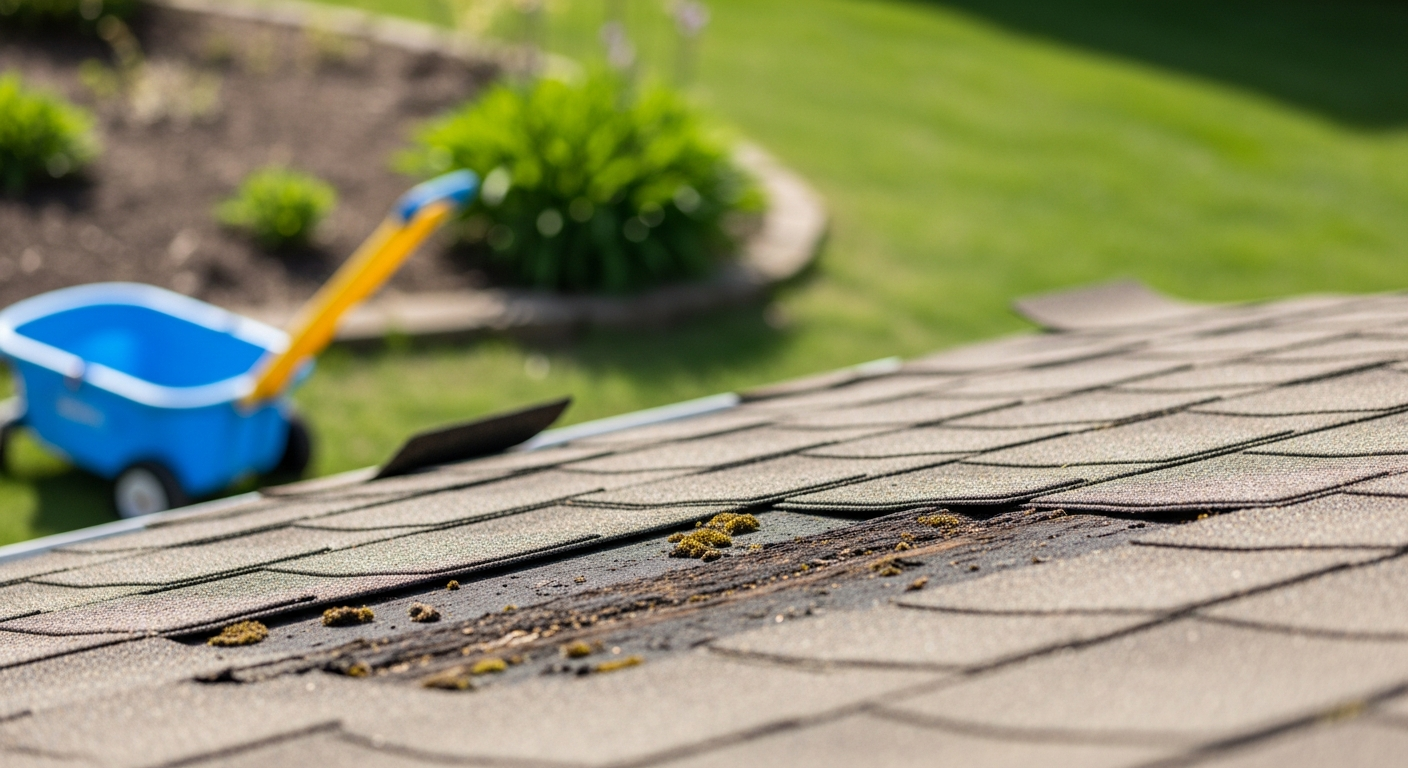
You can often see this from the ground in the form of "curling" or "cupping" at the edges. In severe cases, you may see cracks forming across the surface of the shingle. If a shingle is so dry that it might snap if handled, it can no longer protect your home from wind or water. Restoring those oils is the only way to bring back that necessary pliability.
Is Your Roof a Candidate? Self-Inspection Checklist
You don't always need to get on a ladder to see if your roof is struggling. If you can check off two or more of the following, your roof is likely a prime candidate for a bio-based restorative treatment.
[ ] Age of Roof: Is your roof between 7 and 15 years old?
[ ] Gutter Debris: Do you see a significant amount of "sand" or granules in your gutters?
[ ] Visible Streaks: Are there dark, vertical stains or "tiger stripes" on the north-facing slopes?
[ ] Curled Edges: Do the corners of the shingles look like they are lifting or turning upward?
[ ] Bald Spots: Are there patches where the shingle looks darker because the granules are missing?
[ ] Recent Storms: Has the roof survived several harsh Minnesota winters without any maintenance?
If these signs are present, the structural integrity of your asphalt is beginning to fail due to oil loss. Rejuvenation works by replacing those lost oils, stopping the shedding of granules and extending the life of your roof by up to 15 years.
Who Is a Candidate for Roof Treatment (And Who Isn’t)?
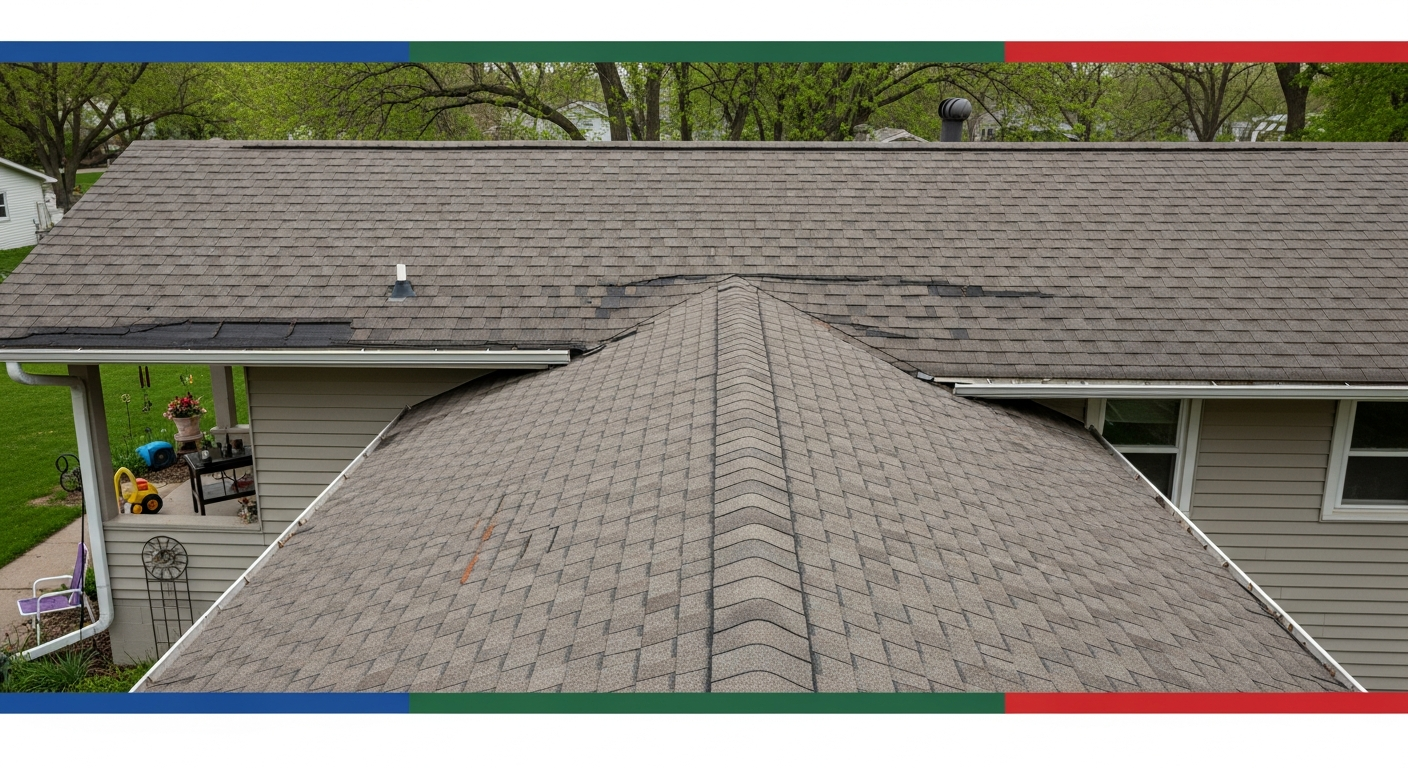
shingle rejuvenationWhile we’d love to say our treatment works for every home, the truth is that roof rejuvenation is a preventative maintenance tool, not a magic wand for a failing structure. To maintain the integrity of your home and our own professional authority, we have to be honest: some roofs are simply past the point of no return. Understanding where your shingles fall on the spectrum is the first step in deciding if is the right financial move or if you are throwing money at a problem that requires a hammer and nails.
| Ideal Candidate for Rejuvenation | Replacement Required (Not a Candidate) |
| :--- | :--- |
| Asphalt shingles typically between 6 and 20 years old. | Active leaks or visible water staining on interior ceilings/attics. |
| Shingles showing signs of aging like minor granule loss or "balding." | Structural damage, such as sagging roof lines or rotting roof decking. |
| Shingles that are starting to feel brittle but are still mostly intact. | Large sections of missing shingles caused by high winds or impact. |
| Minor curling at the edges or "cupping" of the shingle tabs. | Shingles that are so "toasted" they crumble or snap when touched. |
| A roof that is structurally sound but losing its natural flexibility. | Roofs with significant mold or moss growth that has compromised the mat. |
A Note on Non-Asphalt Roofs
It is also vital to distinguish between materials. Our bio-based formula is specifically engineered to replenish the petrochemical oils found exclusively inside asphalt shingles. If your home features a metal, tile, slate, or wood shake roof, it is not a candidate for this treatment. These materials do not absorb the bio-oils in the same way, and the treatment would be ineffective.
multi-point inspectionIf you aren't sure where your roof stands, a professional is the only way to verify if your shingles have enough life left to benefit from rejuvenation or if a full replacement is your only safe option.
Analyzing the ROI: Roof Rejuvenation vs. Total Roof Replacement
When you’re staring down a $15,000 to $25,000 quote for a full roof replacement, the question isn't just "does roof rejuvenation work?"—it's "how much can it save me?" In the world of home maintenance, roof rejuvenation is the ultimate financial shortcut that doesn't compromise on quality.
roof rejuvenation treatmentOn average, a single costs only 15% to 20% of the price of a total tear-off and replacement. For most homeowners in Southeastern Minnesota, that means spending a few thousand dollars to secure another 5 to 15 years of life out of their existing shingles.
The Cost-Benefit Breakdown
A full replacement is a massive capital expense. Beyond the materials and labor, you’re paying for the disposal of tons of old shingles. Rejuvenation avoids those costs entirely. To maintain maximum protection, we recommend a reapplication every 5 years. Even with three applications over 15 years, the cumulative cost is still significantly lower than a single replacement.
By opting for restoration, you aren't just delaying the inevitable; you are resetting the aging clock of your asphalt. This allows you to keep your hard-earned money in your savings account (or invested elsewhere) rather than buried in a landfill.
Coating vs. Restoration: Why the Difference Matters
It is common to confuse "roof coatings" with "roof rejuvenation," but the ROI profiles are very different.
Surface Coatings: These are typically acrylic or silicone-based products that sit on top of the shingles. While they provide a temporary water barrier, they do nothing to address the internal brittleness of the asphalt. They are prone to peeling and cracking under the intense Minnesota freeze-thaw cycle.
corn-based formulaRoof Rejuvenation (Restoration): This is a penetrating treatment. Our soaks deep into the shingle, replacing the dried-out petrochemical oils with bio-based oils. This restores the original flexibility and "grip" that holds granules in place.
Because rejuvenation works from the inside out, it doesn't peel or flake. It fundamentally changes the chemical composition of the shingle to make it behave like a new one again. This deeper level of protection is why we can confidently offer a five-year transferable warranty with every application.
Safety and Sustainability: Why Corn-Based Formulas Matter for Minnesota Families
In Southeastern Minnesota, we pride ourselves on our natural beauty and agricultural heritage. Choosing a corn-based roof rejuvenator isn't just a win for your wallet; it’s a responsible choice for our local environment. By opting for a bio-based solution rather than a full roof replacement, you are participating in a more sustainable home maintenance cycle.
Environmental Benefits of Bio-Based Restoration:
Drastic Waste Reduction: Rejuvenation can extend the life of your shingles by up to 15 years, preventing tons of asphalt waste from entering Minnesota landfills.
Renewable Resources: Our formula is derived from soy and corn oils, moving away from the heavy petroleum dependency found in traditional roofing materials.
Lower Carbon Footprint: The energy required to manufacture, transport, and install a brand-new roof is massive. Rejuvenation uses a fraction of those resources.
USDA BioPreferred ProgramCertified Green Technology: Our treatments are recognized by the , which identifies products composed of the highest levels of renewable biological materials.
Safe for Your Pets, Plants, and Family
One of the most frequent questions we hear from families in Rochester and the surrounding areas is whether the treatment will harm their landscaping or their four-legged friends. Because our formula is 90% bio-based and non-toxic, it is completely safe for the plants in your garden beds and the grass where your pets play. There are no harsh chemical fumes or dangerous runoff to worry about. Once the application is dry—which typically takes about 30 to 45 minutes—your children and pets can return to the yard with total peace of mind. Unlike traditional "roof coatings" that may contain high VOCs (Volatile Organic Compounds), our corn-based solution is as gentle on your home’s ecosystem as it is effective on your shingles.
Professional Application Standards: Weather, Warranties, and Insurance
When homeowners ask, "does roof rejuvenation work?" the answer often depends on who is doing the work and how they are doing it. While it might be tempting to view roof restoration as a weekend DIY project, achieving professional-grade results requires more than just a ladder and a garden sprayer.
learn how the roof rejuvenation process worksProfessional application involves specialized, high-volume, low-pressure equipment specifically calibrated to deliver the bio-based oil at a precise rate. If the spray is too thin, it won’t penetrate the shingle deeply enough to restore flexibility; if it’s too thick, you end up with unnecessary runoff. Our technicians are trained to ensure every square inch of your roof receives the exact saturation level needed to soak through the granules and into the asphalt mat. To see the step-by-step breakdown of how we ensure this precision, you can on our dedicated process page.
Minnesota Weather and Temperature Requirements
In Southeastern Minnesota, our window for roof rejuvenation is dictated by the thermometer. Because we use a corn-based, bio-preferred formula, the temperature must be at least 40°F and rising for the oil to maintain the correct viscosity for penetration.
If it’s too cold, the oil thickens and sits on top of the shingles like a film rather than soaking in. Additionally, the roof surface must be completely dry at the time of application, and we require a window of at least 30 to 60 minutes of dry weather after the treatment is applied. Once that initial hour has passed, the solution is absorbed enough that a typical Minnesota rain shower won’t wash it away.
Questions to Ask Your Roofer
Before you sign a contract for roof restoration, ensure you are working with a legitimate professional by asking these key questions:
What is the bio-based content of the product? (Look for USDA Bio-Preferred certification).
Is your company fully insured specifically for roof-top applications?
Do you perform a full roof inspection and provide a shingle "tune-up" before spraying?
What is the specific temperature range you require for application?
How do you protect my landscaping and siding during the process?
Does the warranty cover both the product and the labor?
Red Flags to Watch For
Not all "roof spray" services are created equal. Be on the lookout for these warning signs that a contractor might not be following professional standards:
The "Too Good to Be True" Price: High-quality bio-oils are specialized products. If the quote is significantly lower than competitors, they may be using watered-down solutions or non-certified oils.
Applying Over Damaged Shingles: A professional will never spray a roof that has active leaks, missing shingles, or structural rot without repairing those issues first.
No Ground Protection: If the crew doesn't plan to pre-wet or cover your prize-winning hostas and bushes, they aren't following best practices.
Pressure Washing at High PSI: While a roof might need a light cleaning, a contractor using a standard high-pressure power washer on your shingles is doing more harm than good by stripping away the very granules we are trying to save.
Southeastern Minnesota Home Stewardship and Structural Resilience
In Southeastern Minnesota, our homes aren't just shelters; they are significant investments that must withstand some of the most volatile weather in the country. From the sweltering humidity of July to the bone-chilling sub-zero depths of a polar vortex, your roof is the first line of defense. This extreme thermal cycling—the constant expansion and contraction of shingles as temperatures swing—is what eventually leads to asphalt failure. When the natural oils in your shingles dry out, they become brittle, crack, and lose their ability to shed water, leaving your home vulnerable to the next big summer storm or heavy snow load.
Does roof rejuvenation work in such a harsh climate? Absolutely. In fact, it is specifically designed for environments like ours. By utilizing a corn-based, bio-preferred formula, we replenish the essential oils that the Minnesota elements strip away. This isn't a temporary cover-up; it is a structural restoration that returns flexibility to the asphalt, allowing your shingles to breathe and move with the temperature changes rather than snapping under the pressure. Given that we are surrounded by the very cornfields that provide the ingredients for this technology, there is a certain poetic justice in using local, bio-based solutions to protect our local architecture.
Local Expertise for SE MN Homeowners
We aren't a national chain that doesn't understand the difference between a rainy day in Seattle and a blizzard in Owatonna. We are local stewards committed to:
Thermal Resilience: Ensuring your roof can survive 100-degree temperature swings.
Sustainable Stewardship: Extending the life of your existing roof to keep shingles out of local landfills.
Property Value Protection: Maintaining the structural integrity and curb appeal of your home for the long haul.
Protect Your Home's Value Today
Don't wait for a leak to tell you your shingles have failed. Protecting your property value starts with proactive maintenance that addresses the specific challenges of the Minnesota climate.
Ready to see if your roof is a candidate for restoration?
Frequently Asked Questions About Roof Rejuvenation
Does roof rejuvenation void my existing manufacturer warranty?
Roof rejuvenation is a maintenance treatment that is compatible with most manufacturer warranties. Leading asphalt shingle producers recognize that the application of bio-based oils does not change the physical structure of the shingle or impact the original limited warranty. This process is essentially a way to replenish what time and weather have removed from the asphalt material.
Will the treatment change the color or appearance of my shingles?
The treatment typically results in a subtle improvement in the appearance of the shingles. As the oils are absorbed, the shingles take on a darker, richer color that often resembles their original shade when new. It also helps to eliminate the dull, grey look associated with surface oxidation without using dyes or paints.
How many times can a roof be rejuvenated over its lifetime?
A standard roof can usually be treated up to three times over its lifespan. Each individual application adds approximately five years of flexibility and protection, meaning a single roof could see up to 15 additional years of service through proactive maintenance.
Is there a specific age range for shingles that work best with this treatment?
The most effective age range for treatment is typically between 6 and 20 years. Shingles in this stage have begun to lose their natural flexibility but generally still have enough structural integrity to benefit from the molecular restoration of essential oils.
How long after application does it take for the formula to be rain-ready?
The formula is designed for quick penetration into the asphalt layers and is usually rain-ready within 30 to 60 minutes of application. This rapid absorption ensures the treatment remains effective even if the unpredictable Minnesota weather brings a sudden shower shortly after our team finishes. Taking a proactive approach to your home’s exterior maintenance ensures lasting protection and peace of mind.
Secure Your Professional Roof Assessment
learn how the roof rejuvenation process worksReady to see if your roof is a candidate for rejuvenation? Contact our Southeastern Minnesota team today for a free, no-obligation roof estimate and assessment. Taking this step allows you to through a personalized inspection that evaluates the current health and remaining lifespan of your specific asphalt roofing system.
Comments